
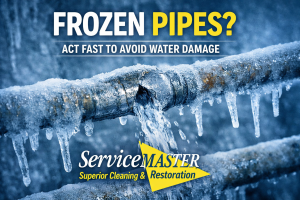
 Frozen pipes are a common winter issue that can quickly turn into a major problem if not handled properly. When temperatures drop, water inside pipes can freeze, expand, and cause pipes to crack or burst. This often leads to sudden water damage once the ice begins to thaw. Knowing how to respond — and when to call for professional help — can make a significant difference in limiting damage to your home or business.
If you suspect a pipe is frozen, act carefully. Shut off the water supply if possible and avoid using open flames or high heat sources to thaw pipes, as this can cause further damage or create safety risks. Slow, controlled warming — such as using warm air — is safer, but even then, hidden cracks may already exist. Many pipe failures happen after the freeze, when water pressure is restored and leaks appear behind walls or ceilings.
Preventing frozen pipes starts with preparation. Insulating exposed pipes, keeping indoor temperatures consistent, and allowing faucets to drip slightly during extreme cold can help reduce risk. For commercial properties or unoccupied buildings, regular inspections and winterization are especially important. These steps can help protect plumbing systems and avoid costly emergency repairs during cold weather.
If frozen or burst pipes result in water damage, fast response is critical. Moisture can spread quickly, affecting floors, walls, and structural materials. A professional restoration team can assess the damage, remove excess water, and begin drying and cleanup immediately. If you experience water damage from frozen pipes, contact ServiceMaster Superior Cleaning & Restoration for 24/7 emergency response and professional restoration services.